

The Role of Adhesives in Brand Protection and Performance 
Labels are the silent salespeople and compliance guardians of your product. Yet, behind every successful label is an adhesive that quietly does the heavy lifting. Selecting the wrong adhesive is a major risk; it can lead to peeling corners (flagging), residue left on the product, critical compliance failure, or even a damaged brand perception. Furthermore, even the perfect adhesive formula can fail if the label is applied under adverse production conditions (e.g., too cold, too fast, or on a contaminated surface). Selecting the right pressure-sensitive adhesive (PSA) ensures performance, durability, and customer satisfaction by creating a strategic bond between the label facestock and the container substrate. (Note: The adhesive must be chemically compatible with the facestock—for example, pairing a durable film with an appropriate acrylic adhesive—or the entire construction is compromised.) Adhesives are categorized by their intended lifespan and performance profile with the container substrate: permanent, removable, and repositionable. Understanding the core function and technical metrics of each is the first step toward engineering a successful label.
Permanent Adhesives: The Lifetime Bond
Permanent adhesives are engineered for the long haul. They are designed to create a strong, lasting bond that cannot be easily removed without tearing the label or damaging the surface. Their function is achieved through superior ultimate adhesion and shear strength.
Technical Considerations
- Anchoring Mechanism: The adhesive penetrates microscopic pores or contours on the substrate, chemically or mechanically setting itse
lf into place. - Ultimate Adhesion: This is the maximum bond strength achieved after the adhesive has had time to fully cure or “set” (typically 24-48 hours).
- Substrate Matching: While they perform well on High Surface Energy (HSE) materials like glass and metal, specialized versions exist for problematic Low Surface Energy (LSE) plastics (e.g., polyethylene, polypropylene), often utilizing rubber or acrylic blends for increased initial tack (stickiness).
- Environmental Resistance: Permanent adhesives are frequently formulated with enhanced resistance to heat, cold (cold flow), moisture, oils, and chemicals to maintain bond integrity under harsh conditions.
Industry Applications
Permanent adhesives are critical when the label must maintain its integrity throughout the product’s life cycle. This includes safety warnings, compliance seals, ingredient lists that must be present until consumption, and durable goods labels that require multi-year performance.

Removable Adhesives: Temporary Solutions, Clean Release
Removable adhesives are engineered for versatility and precision. They provide secure initial bonding but are specifically formulated to release cleanly without tearing the label, damaging the surface, or leaving tacky adhesive residue behind. This balance is achieved through specialized pressure-sensitive chemistries that emphasize controlled peel strength.
Technical Considerations
- Controlled Peel Strength: This is the key metric. The adhesive is designed to have a high enough tack for application but a controlled, lower ultimate adhesion, ensuring it releases from the substrate rather than staying behind.
- Surface Sensitivity: They perform best on smooth, non-porous materials like glass, polished plastic, and non-porous metal. They may not release cleanly from porous surfaces like paper or cardboard, often causing fiber tear.
- Duration Warning: Most removable adhesives are not intended for extreme long-term durability. The bond of many removable adhesives can slowly increase over time, potentially reaching a near-permanent state after many months of application.
Industry Applications
Removable adhesives are ideal for temporary labeling needs such as promotional discounts, inventory tracking, temporary instructions, pricing tags, and identifying items that require the label to be removed before use or resale (e.g., glassware, appliances).
Repositionable Adhesives: Flexibility and Precision
Repositionable adhesives offer unique flexibility during application, providing a temporary window of adjustability. Unlike permanent or simple removable options, these are formulated to allow labels to be gently lifted, shifted, and reapplied multiple times without significant loss of tack.
Technical Considerations
- Low Initial Tack: Repositionable adhesives start with very low initial tack, making them forgiving during manual or automated application.
- The “Adjustment Window”: This feature is crucial for automated labeling lines or complex assembly processes where precision alignment is critical, helping to reduce waste from misapplied labels.
- Dual-Function Adhesives: Some repositionable adhesives are engineered to remain low-tack indefinitely, while others are designed to build adhesion strength over a short period, eventually performing like a permanent or semi-permanent bond.
Industry Applications
These adhesives are best applied to labels that may need fine-tuning during the sorting or packaging process, or consumer
-facing labels like informational decals, instruction tabs, or bookmarks that the end-user may peel back and reapply.
The Production Gauntlet: Application Risks and Considerations
A label’s performance is tested the moment it is applied. Production speed, environmental conditions on the packaging line, and the label’s construction all contribute to application risk. Understanding these variables is crucial to selecting a stable adhesive.
Application Temperature
Adhesives are highly sensitive to temperature at the point of application, which is known as Minimum Application Temperature (MAT). If the container surface is too cold when the label is applied, the adhesive solidifies instantly, preventing it from properly flowing into the microscopic textures of
the container. Conversely, extreme heat can prematurely soften the adhesive, causing it to distort or ooze.
Risk: Applying an adhesive below its MAT (e.g., labeling a bottle coming out of a cold filler) prevents it from properly wetting out (flowing into) the substrate’s microscopic texture. This results in a weak initial bond, leading to immediate or eventual flagging (edge lift) once the product hits the shelf. Applying a label above its Maximum Application Temperature (Max AT) can cause the adhesive to flow prematurely and lose its structural integrity on the liner.
Solution: Specialized adhesives are engineered for both cold-temperature and high-temperature application (such as hot-fill or autoclave processing). The label line must ensure the container temperature falls within the adhesive’s specified MAT and Max AT range before application.
Contamination and Residue
The cleanliness and preparation of the substrate directly impacts bond strength and is often overlooked during high-volume production. Any intervening substance acts as a barrier, preventing the adhesive from achieving the necessary contact and chemical attraction with the packaging material.
Risk: Packaging components, such as mold release agents, silicone sprays, product overflow, dust, or condensation, can act as a barrier between the adhesive and the substrate, preventing effective bonding.
Solution: Aggressive, high-tack permanent adhesives are often specified to cut through minor contaminants, while meticulous line cleanliness protocols are required for critical applications.
Dispensing Speed and Stability
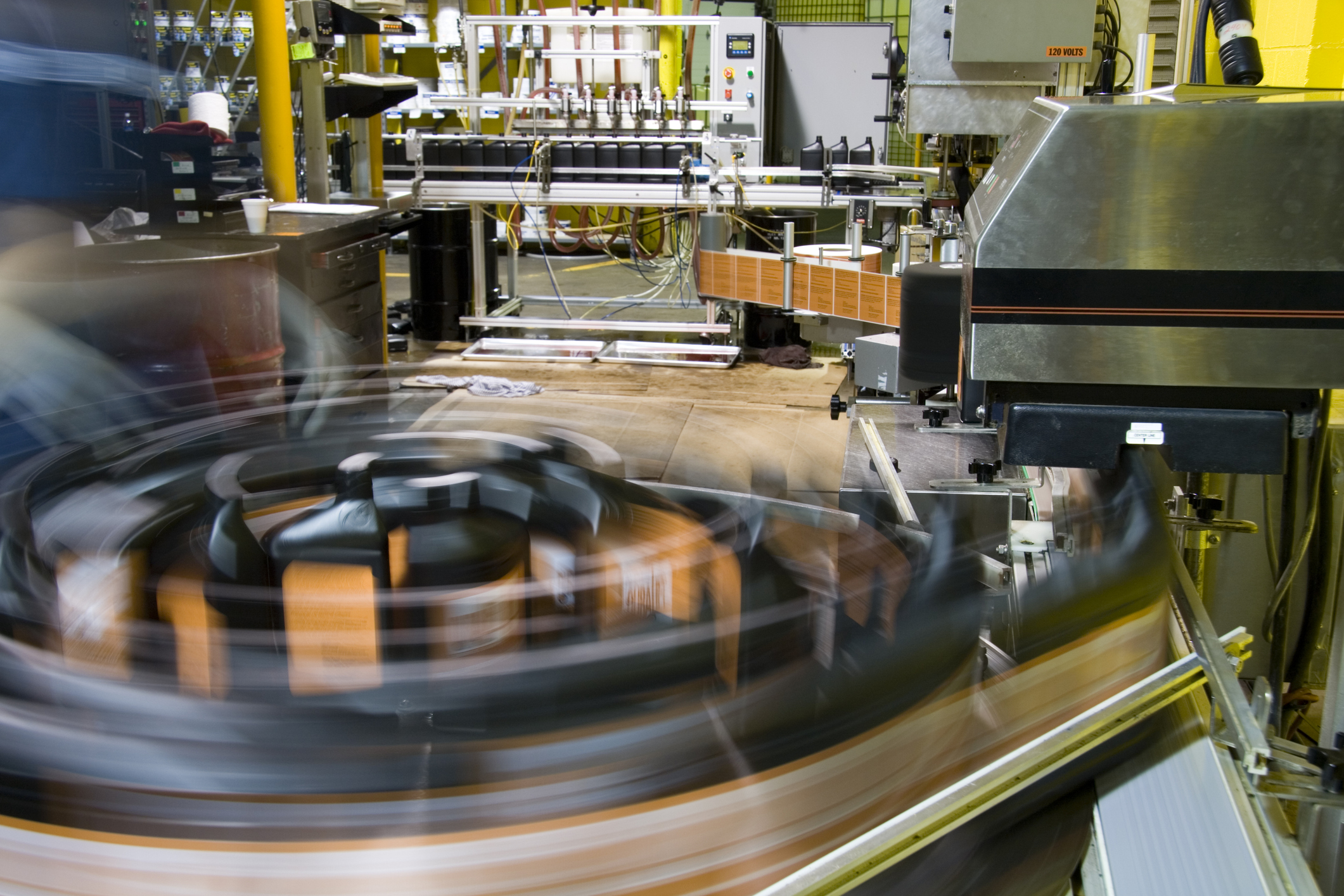
When labels are dispensed at high speeds on automated lines, the adhesive structure must be perfectly balanced to withstand the mechanical stress of application. If the adhesive is too soft or the liner material is inadequate, the label can tear, jam, or ooze adhesive onto the dispensing machinery, leading to costly line shutdowns.
Risk: Certain thick or heavy adhesives can cause ooze (adhesive bleeding onto the liner), leading to messy die-cutting and potential tearing or jamming on high-speed label applicators. The liner and adhesive must be properly balanced to prevent premature separation during dispensing.
Solution: Proper adhesive and liner balance (often using films for stability over paper liners) is required to maintain web tension and ensure the label strip separates cleanly at high speeds.
Adhesive Flow and Cure Time
A successful label requires not just instant stickiness (tack), but time to build its maximum bond strength, referred to as dwell time. Moving the labeled product into a stressful environment—such as a tight shipping carton or a deep freezer—before this cure time is complete can prematurely stress the bond and cause failure.
Risk: The product may be immediately moved to a cold room or packed into a tight carton before the adhesive has had sufficient dwell time (the time needed to achieve ultimate adhesion). If a label is stressed (curved, squeezed) too early, the initial weak bond can fail.
Solution: The production schedule must accommodate the adhesive’s cure time (typically 24 hours at room temperature) before the product is exposed to its final, demanding environment.
ENGINEERING ADHESION
Choosing the right adhesive goes far beyond deciding how “sticky” a label should be. It requires a comprehensive assessment of the substrate material, surface energy (LSE/HSE), environmental hazards, application speed, and required lifespan of the product. Making the right choice is a critical engineering step that ensures stability and quality, minimizing costly downstream issues.
By partnering with an experienced label manufacturer, you gain access not only to a full range of adhesive options but also to technical expertise, peel testing, and environmental validation. We help ensure your label performs reliably as an integral part of your product, from the high-speed application line to the consumer’s hands, letting you focus on your core business.